











🌍 Not All “Countries” Are Created Equal
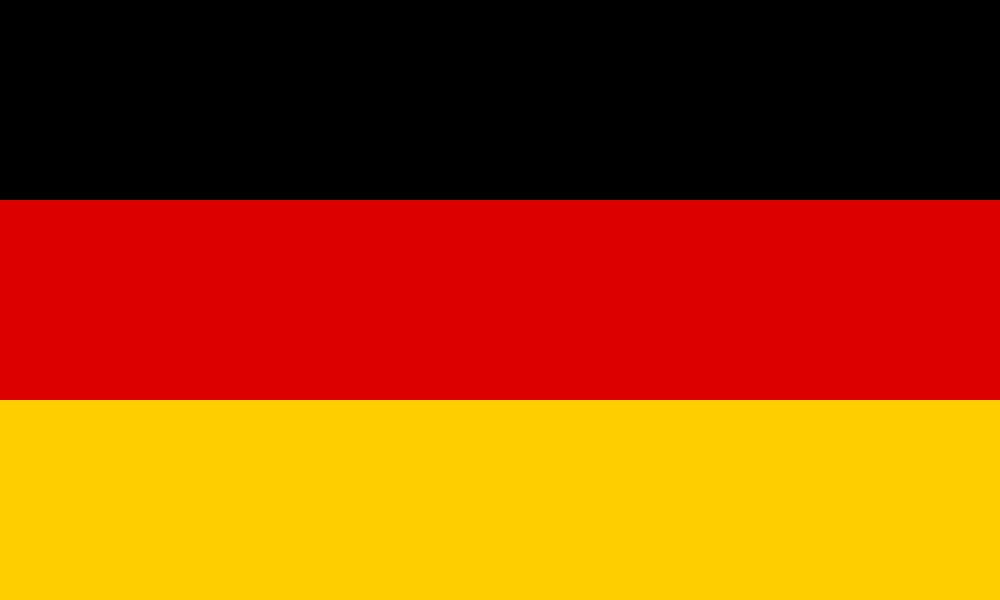
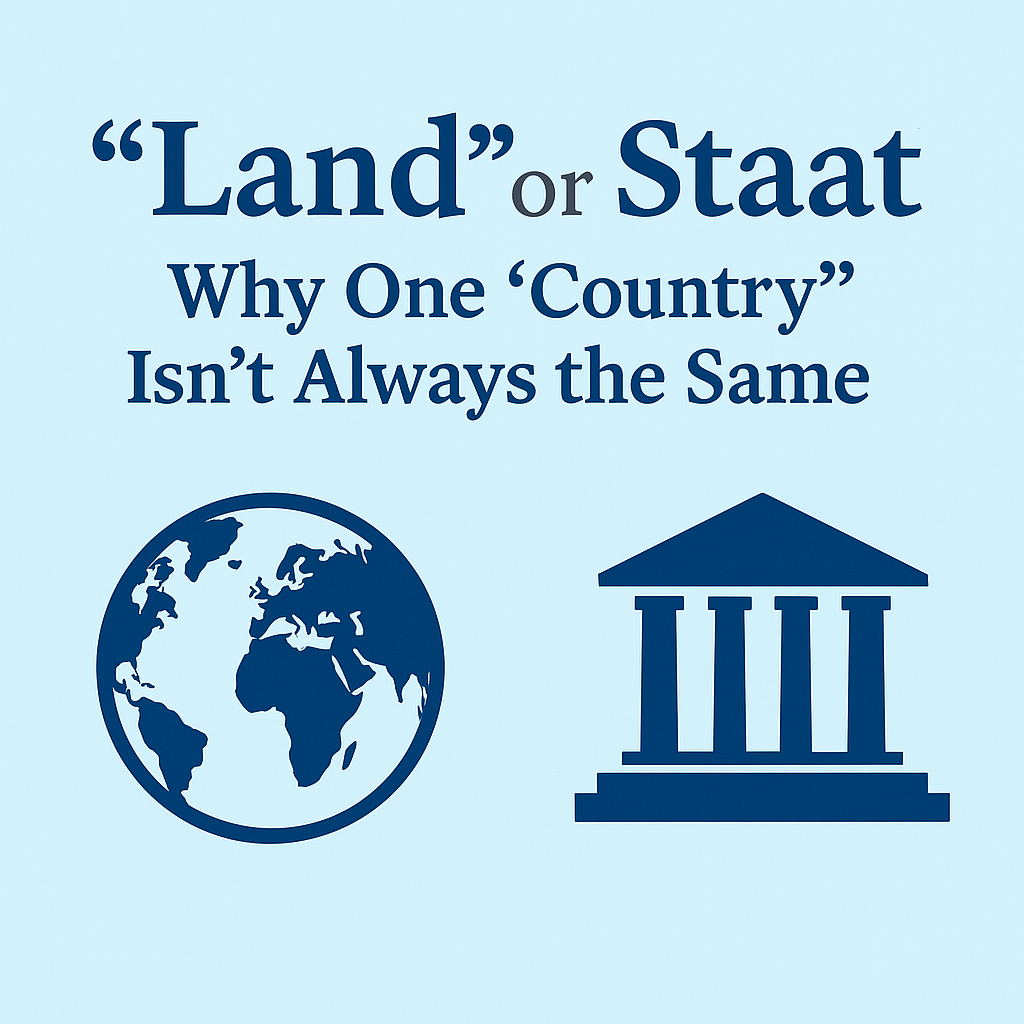
In English, we use the word country freely — to talk about geography, culture, identity, or politics. But in German, that single word splits into two distinct terms:
Land y Staat.
They both translate to “country.” But using the wrong one can make your sentence sound awkward — or just plain wrong.
Vamos a desglosarlo.
🟦 Land: Geography, Identity, and Place
La palabra Land is rooted in space, tradition, culture — and physical geography.
✔️ It’s used when we talk about:
- nature and landscape
- homeland and belonging
- federal regions (Bundesländer)
- emotions and identity
📌 Examples:
- Ich liebe dieses Land. — I love this country.
- Deutschland hat 16 Bundesländer. — Germany has 16 federal states (literally: federal lands).
- Ich wohne auf dem Land. — I live in the countryside.
🧭 Land = where you are / where you come from.
🟥 Staat: Structure, Sovereignty, and Power
La palabra Staat is institutional.
It refers to the governmentEl systemEl legal and political structure of a country.
✔️ It’s used when we talk about:
- sovereignty and diplomacy
- democracy, monarchy, or republics
- laws, social systems, and taxation
- international relations
📌 Examples:
- Deutschland ist ein demokratischer Staat. — Germany is a democratic state.
- Die Schweiz ist ein neutraler Staat. — Switzerland is a neutral state.
- Der Staat erhebt Steuern. — The state collects taxes.
🧭 Staat = how the country is governed.
⚖️ Same Country — Two Sides
Take Germany:
- As a Land, it’s forests, cities, beer, language, and music.
- As a Staat, it’s federal law, constitution, EU membership, Bundestag.
Take Switzerland:
- A beautiful Land in the Alps.
- A neutral Staat in global diplomacy.
Take the U.S.:
- Ein großes Land mit vielen Regionen.
- Ein föderaler Staat mit 50 Bundesstaaten.
💬 Why This Matters in Real Language Use
You don’t need to be a lawyer or a politician to get this right.
But understanding this difference helps you:
- Speak more precisely in German,
- Avoid confusing or awkward phrases,
- Show deeper respect for the culture behind the words,
- Comprender what kind of “country” you’re talking about — place or power?
🔗 Lecturas relacionadas de nuestro blog
→ When “job” Sounds Like a Threat
→ La barrera lingüística no tiene que ver con el idioma
📘 Author’s Column
Tymur Levitin on Language, Meaning and Respect
📍 Founder, teacher, and translator at Levitin Language School — Start Language School by Tymur Levitin
🔗 Elija su idioma
© Tymur Levitin




 Español de México
  English
  Deutsch
  Українська
  Polski
  Русский
  简体中文
简体中文