


















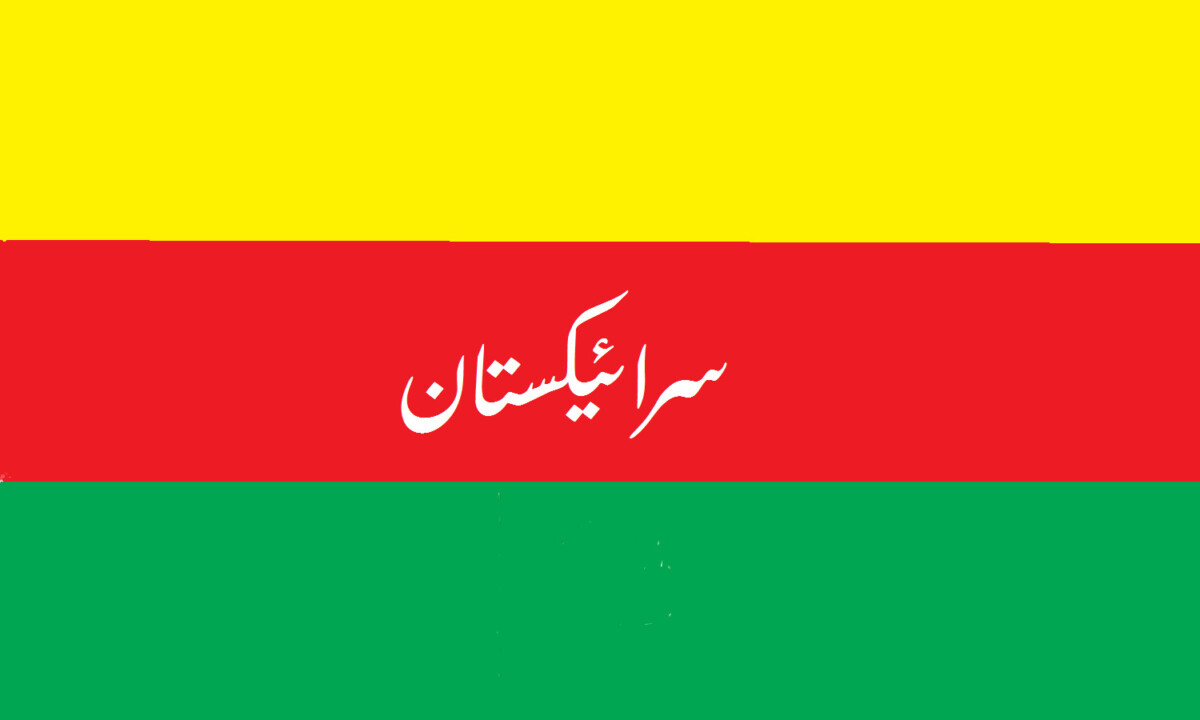








Saraiki is one of those languages that millions of people speak every day — yet few outside South Asia have ever heard its name. It does not dominate headlines, it is rarely taught at universities abroad, and it is often mistakenly reduced to a “dialect.” In reality, Saraiki is a fully developed language with its own history, sound system, cultural memory, and linguistic logic.
For learners, linguists, and culturally curious readers, Saraiki opens a door to a part of South Asia that is rarely explained in English — calmly, accurately, and without stereotypes.
What Is the Saraiki Language?
Saraiki is an Indo-Aryan language spoken primarily in southern Punjab (Pakistan), as well as parts of Sindh, Balochistan, and neighboring regions. Estimates vary, but over 25 million people use Saraiki as their native or primary spoken language.
Unlike Urdu, which developed as a literary and administrative lingua franca, Saraiki grew as a deeply regional language, rooted in oral tradition, poetry, and everyday life. This is one of the reasons it remained underrepresented in global education systems — not because of weakness, but because of proximity to the people.
Saraiki Is Not Urdu — And Not Punjabi
One of the most persistent myths is that Saraiki is simply “a dialect of Punjabi” or “a variant of Urdu.” Linguistically, this is inaccurate.
Saraiki has:
- its own phonetic system, including sounds not used in standard Urdu
- grammatical structures that differ from Punjabi
- vocabulary layers influenced by Sindhi, Persian, and older Indo-Aryan forms
Yes, Saraiki is written using a Perso-Arabic script, similar to Urdu — but script does not define a language. Structure, sound, and meaning do.
Languages are not defined by alphabets. They are defined by how people think and speak.
Why Saraiki Sounds Different
Even listeners familiar with Urdu often notice that Saraiki feels softer, slower, and more melodic. This is not accidental.
Saraiki preserves older phonetic contrasts and vowel patterns that modern standardized Urdu has simplified. Many Saraiki words carry emotional weight through sound alone — a feature that becomes especially visible in poetry and storytelling.
This is one reason why Saraiki literature is often described as intimate rather than formal.
Who Learns Saraiki Today — And Why?
Interest in Saraiki has grown steadily among:
- heritage learners reconnecting with family roots
- linguists studying underrepresented Indo-Aryan languages
- educators working with multilingual communities
- learners interested in South Asian cultural depth beyond Hindi–Urdu binaries
Unlike global languages, Saraiki is rarely learned for “career reasons.” It is learned for understanding people, regions, and identity.
And that makes it one of the most honest reasons to learn a language.
Is Saraiki Difficult to Learn?
For English speakers, Saraiki presents challenges — but not the ones people usually expect.
The real difficulty is lack of structured material, not the language itself. Saraiki grammar is logical, and its sentence structure becomes intuitive once the sound system is understood.
Learners who approach Saraiki as a living spoken language — rather than as a theoretical system — progress much faster.
This is exactly how language learning should work.
Learning Saraiki Online — A Realistic Approach
Saraiki is not taught through mass courses or generic apps. It requires:
- contextual explanations
- careful attention to pronunciation
- understanding of regional usage
- respect for spoken variation
That is why structured one-to-one learning works best for Saraiki.
If you are interested in studying Saraiki in a clear, human, and linguistically accurate way, you can explore the learning format here:
👉 https://levitinlanguageschool.com/languages/saraiki/
Why Languages Like Saraiki Matter
Global languages connect markets.
Local languages connect people.
Saraiki reminds us that linguistic value is not measured by international status, but by how deeply a language carries memory, emotion, and everyday meaning.
To understand Saraiki is not to “add another language.”
It is to listen to a voice that has always been there.
Author: Tymur Levitin
Founder & Director, Levitin Language School
Author’s approach: language as meaning, not memorization
© Tymur Levitin