







































Author’s Column by Tymur Levitin
Founder, Director, and Head Teacher
Levitin Language School | Start Language School by Tymur Levitin
Global Learning. Personal Approach.
🌍 Choose your language:
👉 https://levitinlanguageschool.com/#languages
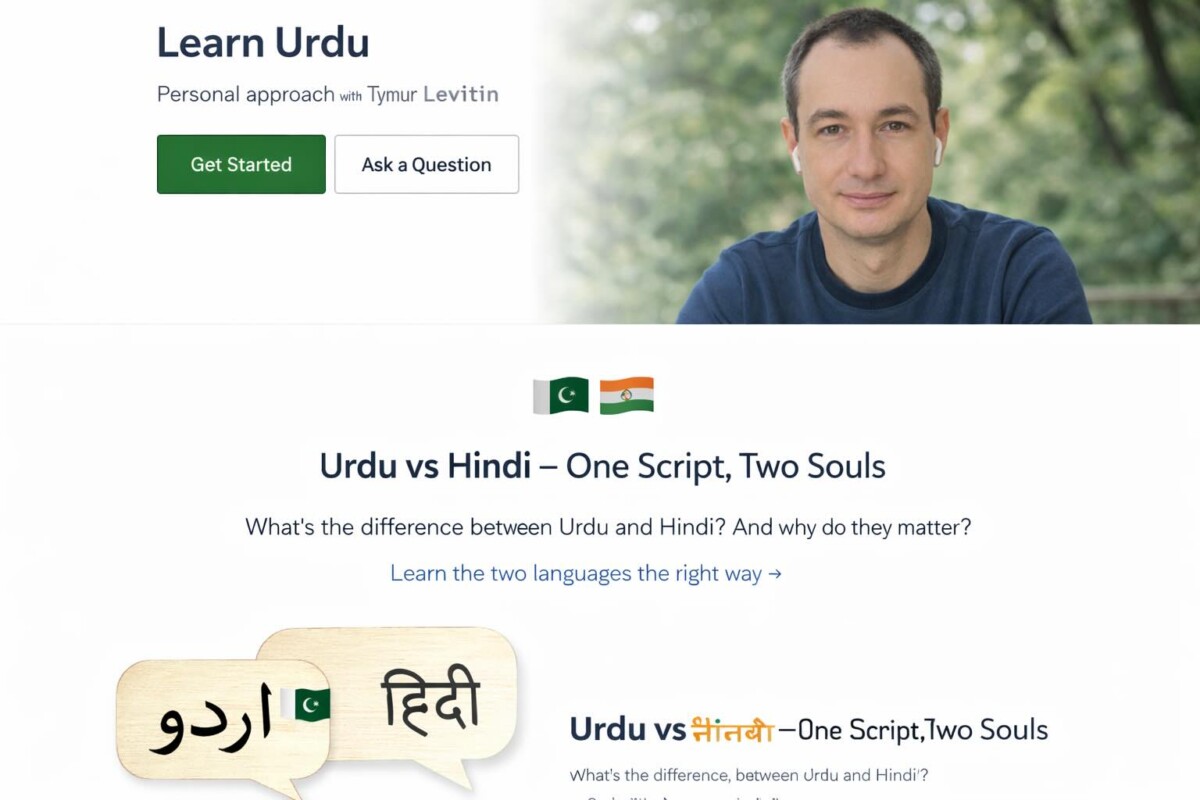
Urdu vs Hindi — One Script, Two Souls
At first glance, Urdu and Hindi seem almost identical.
Many English speakers are told they are “basically the same language.”
That statement is only partially true — and dangerously misleading.
Yes, Urdu and Hindi share historical roots and a similar spoken base.
But they represent two different cultural worlds, two ways of thinking, and two linguistic identities.
Understanding this difference changes how you learn — and how fast you progress.
One Spoken Base, Two Cultural Directions
In everyday conversation, basic spoken Urdu and Hindi can sound very similar.
A beginner might even believe they are interchangeable.
But language is never just sound.
Urdu grew under Persian and Arabic influence, shaping its vocabulary, imagery, and emotional tone.
Hindi developed under Sanskrit traditions, carrying different cultural and literary associations.
Over time, these influences created two distinct linguistic identities — not just two accents.
The Script Is Not a Detail — It Is a Worldview
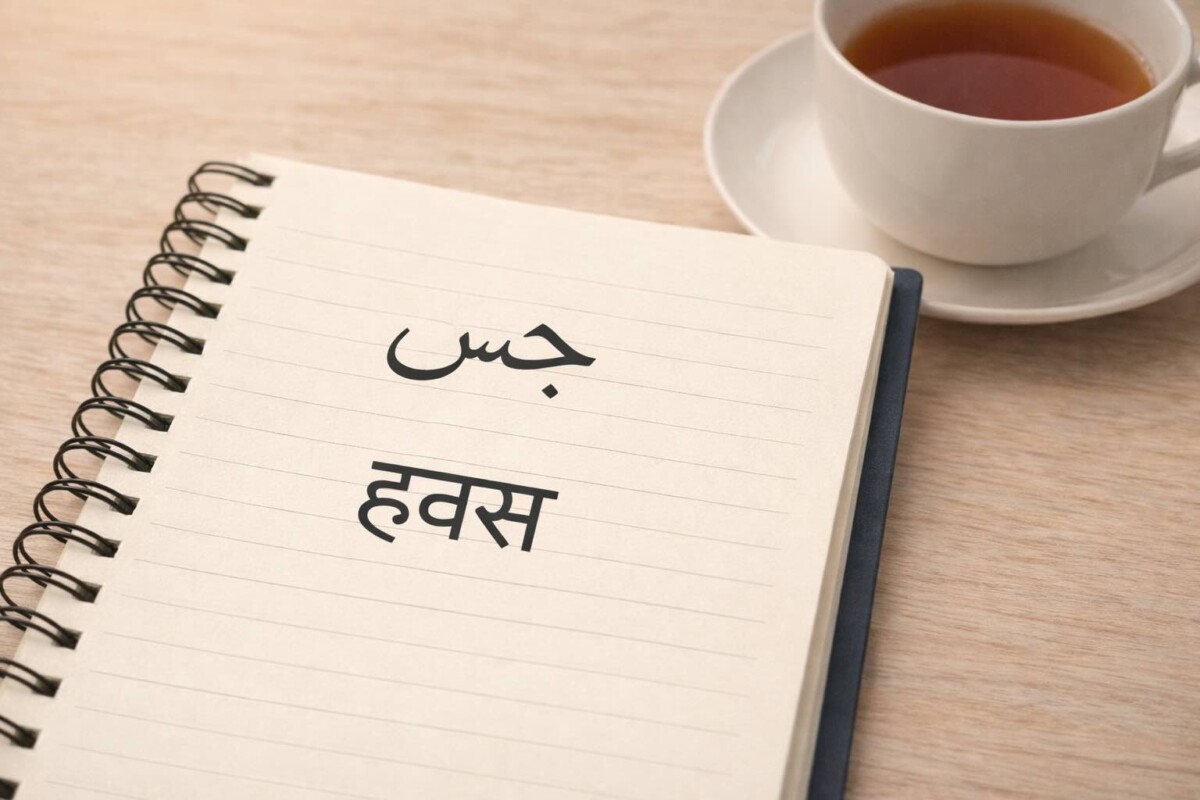
Urdu is written in a Perso-Arabic script, flowing from right to left.
Hindi uses Devanagari, structured and symmetrical, written from left to right.
This is not cosmetic.
Script influences:
- how words are perceived
- how meaning is layered
- how speakers relate to tradition and expression
To learn a language properly, you must respect its script — because script shapes thought.
Why English Speakers Get Confused
English speakers often approach languages functionally:
“If I can communicate, that’s enough.”
But Urdu and Hindi demand cultural awareness.
Learning Urdu through Hindi logic — or Hindi through Urdu assumptions — leads to:
- pronunciation errors
- vocabulary misunderstandings
- cultural misinterpretations
True fluency begins when you stop treating language as a tool and start seeing it as a system.
Urdu: Poetry, Emotion, Precision
Urdu is deeply poetic.
Even everyday expressions carry emotional nuance.
Its vocabulary allows subtle shifts of tone — respect, intimacy, distance, irony — often within a single phrase.
That richness is not accidental.
It is the result of centuries of literary and cultural development.
Learning Urdu means learning how emotion is structured in language.
Hindi: Structure, Clarity, Continuity
Hindi emphasizes clarity and structural continuity.
Its connection to Sanskrit gives it a different sense of order and formality.
Where Urdu leans toward metaphor, Hindi often prefers directness.
Neither is “better” — they simply reflect different ways of organizing meaning.
Understanding this distinction makes learning both languages easier — and more honest.
Learning Urdu the Right Way
At Levitin Language School, Urdu is taught as a living, independent language — not as a variation of something else.
We focus on:
- sound and rhythm
- script awareness
- cultural logic behind expressions
This approach prevents confusion and builds confidence from the start.
Language is not memorization.
It is recognition.
Learn Urdu Online with Levitin Language School
Urdu deserves depth, not shortcuts.
At Levitin Language School, students learn Urdu with respect for its identity, history, and expressive power — guided personally, step by step.
🌍 Choose your language:
👉 https://levitinlanguageschool.com/#languages
© Tymur Levitin
Founder, Director, and Head Teacher
Levitin Language School | Start Language School by Tymur Levitin