

























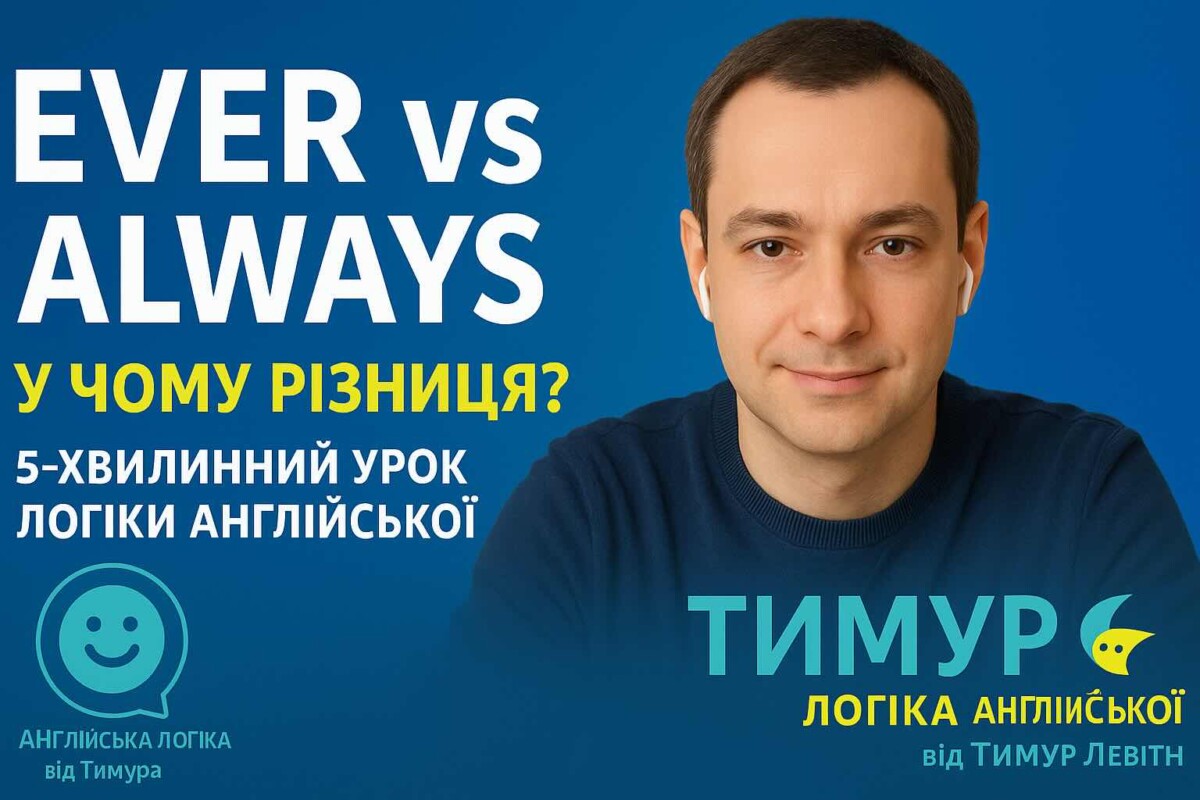
A friendly English lesson for Ukrainian-speaking students created by Tymur Levitin. Includes: ✔ clear explanation of EVER vs ALWAYS ✔ real-life examples ✔ intuitive time logic ✔ pronunciation focus ✔ contrast table ✔ thinking-based learning approach 👇 Full article: https://levitinlanguageschool.com/english/ever-vs-always-do-they-really-mean-the-same/
Ever vs Always — A 5-Minute English Lesson for Ukrainian Learners
05.12.2025
Back to filtered list

Tymur Levitin
Teacher of the Department of Translation. Professional certified translator with experience in translating and teaching English and German. I teach people in 20 countries of the world. My principle in teaching and conducting lessons is to move away from memorizing rules from memory, and, instead, learn to understand the principles of the language and use them in the same way as talking and pronouncing sounds correctly by feeling, and not going over each one in your head all the rules, since there won’t be time for that in real speech. You always need to build on the situation and comfort.
View profile
Related Articles
22.09.2025
•
Timur
Ever vs Always — Do They Really Mean the Same?
EVER as “always”: when it truly means forever — and when it’s just a textbook myth Author’s Column by Tymur…
Read Article
19.10.2025
•
Timur
English for Everyday Communication — Speak Naturally in Real Life
Choose your language English for Real Life, Not Just Textbooks Many people study English for years — but still feel…
Read Article
15.12.2025
•
Timur
Why Confidence Without Understanding Is the Biggest Language Myth
Why speaking more doesn’t mean knowing more — and how false fluency blocks real progress Choose your language:https://levitinlanguageschool.com/#languages The Cult…
Read ArticleRelated Lessons

English
Lesson 26 — Using Public Transport | English for Kids | Vocabulary + Dialogue + Role Play
11.01.2026

English
Why Germans Say Quark and Austrians Say Topfen — Cultural German Explained (International Learners)
18.02.2026
English
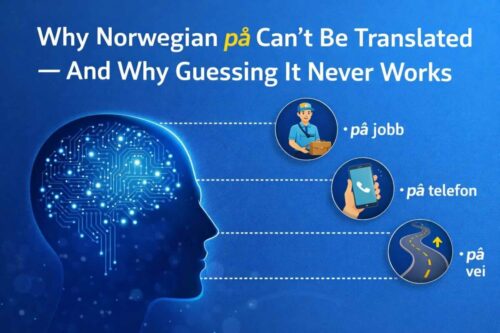
Why Norwegian på Can’t Be Translated (for English Speakers)
24.01.2026